Can Interiors do More with Less
Interiors today are shaped by cycles of excess, yet the most effective path to sustainability may lie not in adding more, but in learning to work with less
Sustainability in the built environment today carries multiple meanings. It is often understood through green ratings, material choices, climate-responsive strategies, or reductions in emissions. At its core, however, sustainability is about minimising impact on the planet, and the most direct way to achieve this is also the simplest: to consume less.
The Environmental Cost of Interior Fit-Outs
Within this larger conversation, interior design remains an overlooked yet significant contributor to the overall carbon footprint of construction. A substantial proportion of waste generated across the industry comes from interior fit-outs and finishing layers such as partitions, ceilings, cladding, and furniture. These elements are frequently replaced well before the end of their functional life, driven by shifting programmes, tenant cycles, and changing aesthetic preferences.
In rapidly evolving markets such as India, where design is closely tied to global trends, interiors are often led by surface-driven decisions. While this enables visual change and adaptability, it also reinforces a cycle of consumption that is difficult to sustain. This calls for critical reassessment.
Starting With What Exists
A more meaningful approach requires a shift in mindset. Rather than focusing only on specifying materials, it calls for reducing the need for new ones. This begins with looking closely at what is already available and treating surplus not as waste, but as a resource.
This approach was explored in the Placement Cell at the Jaipuria Institute of Management, Noida. Located on the ground floor of the Boys’ Hostel Block, the interiors were developed by working with materials generated during the construction of the hostel itself. Salvaged bricks, surplus steel, corrugated cement sheets, and leftover timber and metal components from the building were creatively reintroduced into the interior, ensuring that the need for newly sourced materials was significantly reduced.
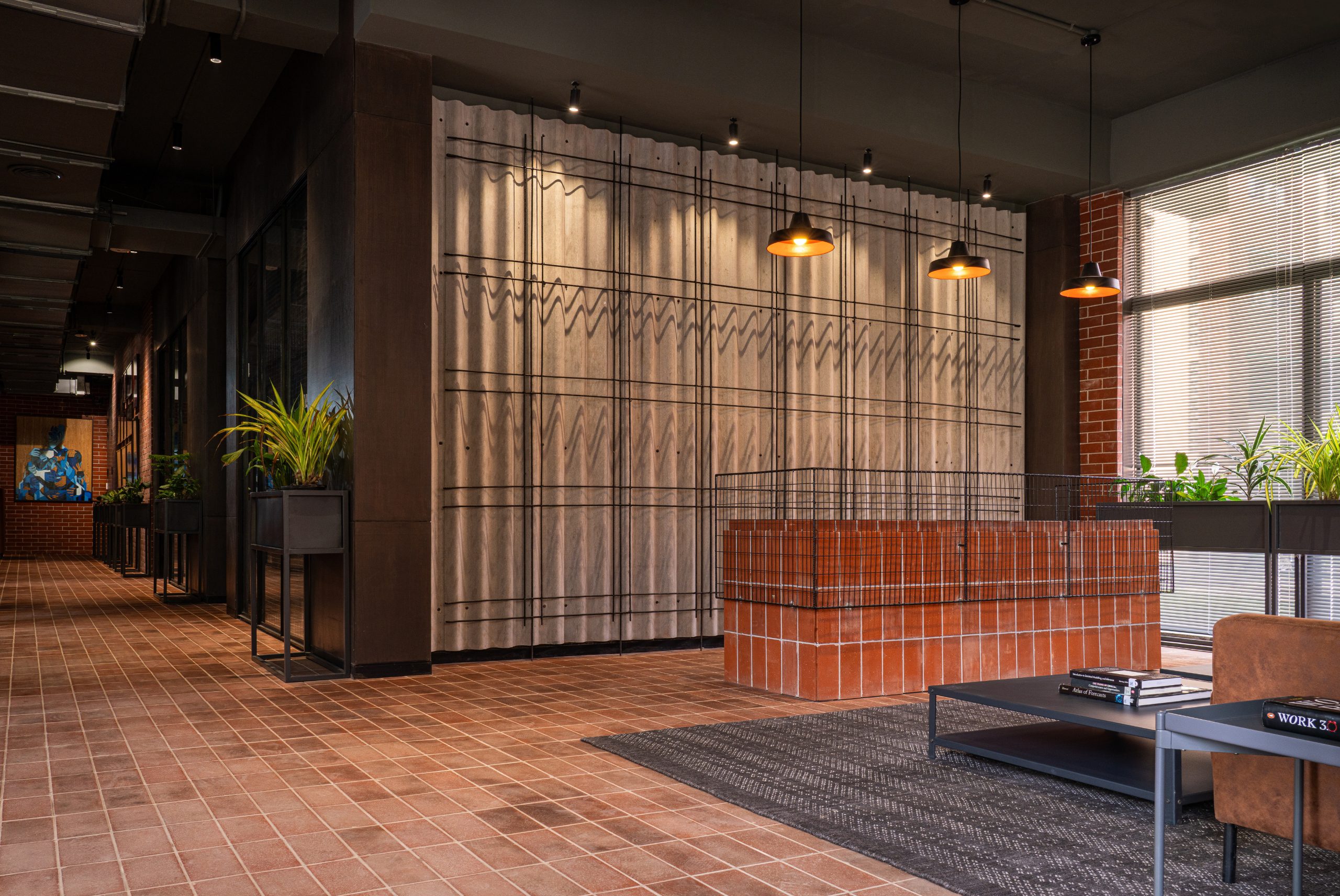
These materials were reworked to define the spatial character of the interiors. Fly ash bricks are used across surfaces, including flooring, to establish continuity and warmth, while salvaged bricks are introduced as feature elements. Surplus steel from the site is adapted into interior partitions and furniture, while corrugated cement sheets introduce texture and visual rhythm within the work environment. Smaller leftover elements, including wooden planks and metal fittings, are integrated into built components and detailing.
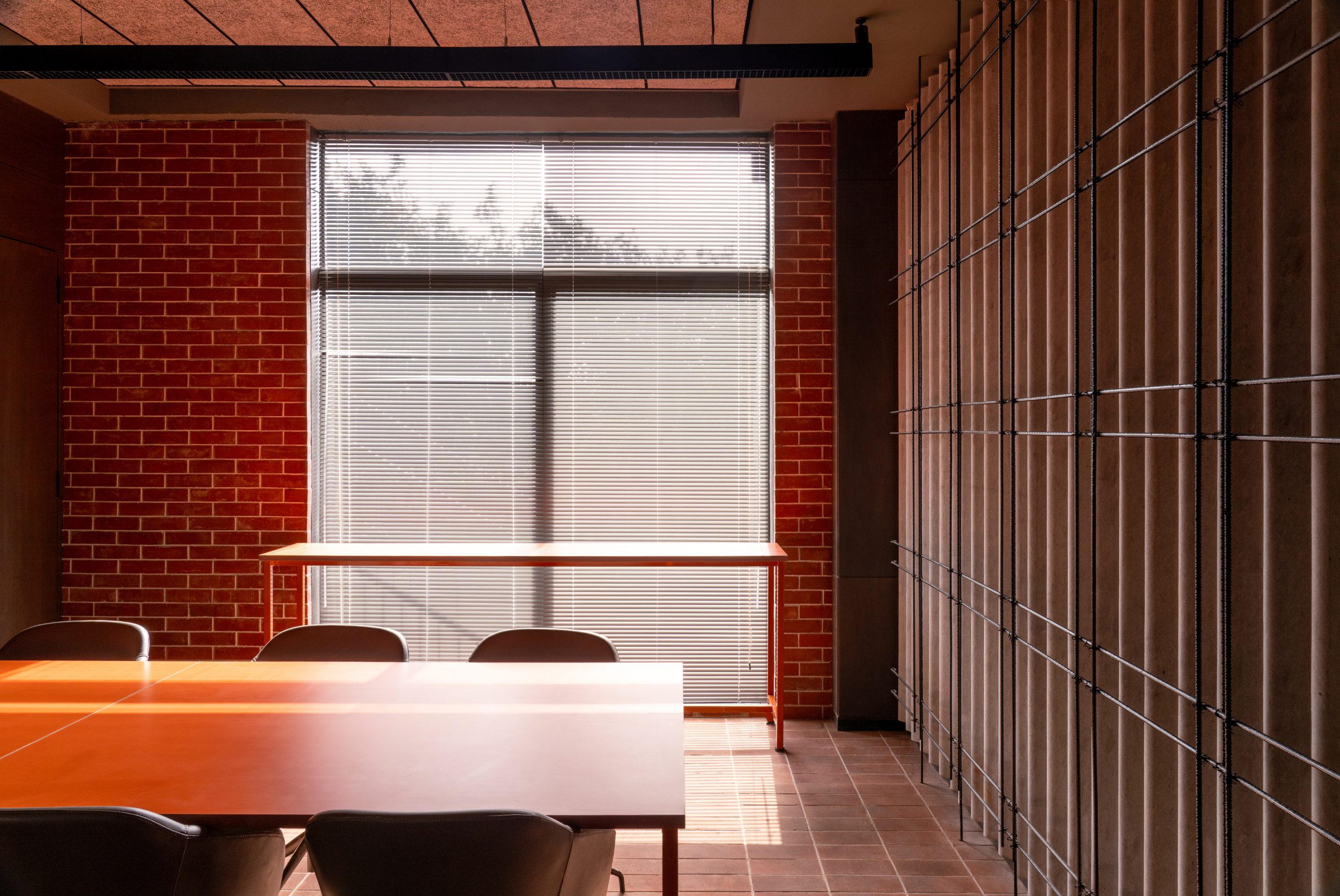
The result is a cohesive and tactile work environment shaped by resource-conscious decisions. The space feels grounded and materially expressive, while remaining aligned with the needs of a contemporary workspace.
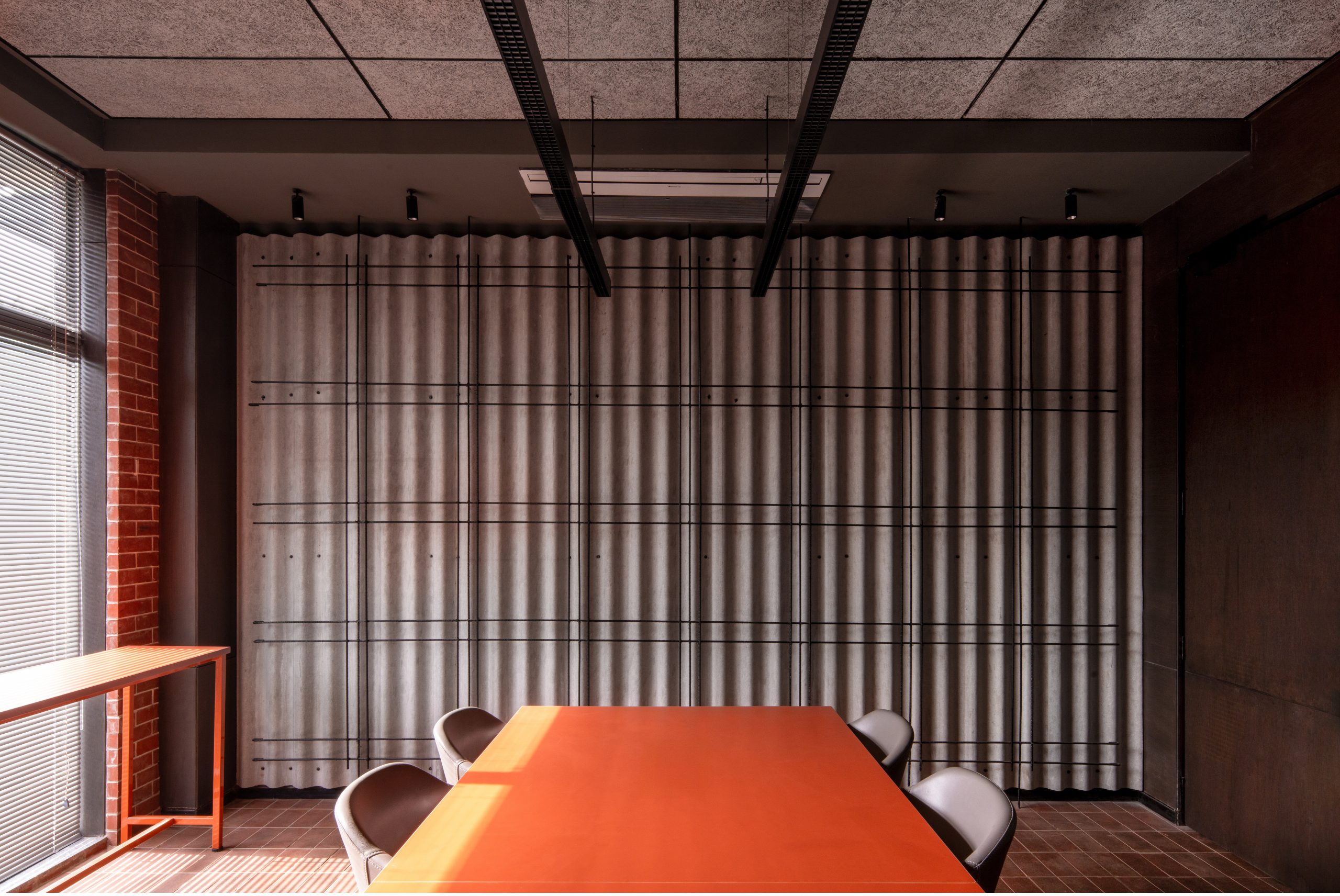
Among the multiple ways to approach sustainability, including ratings, local materials, adaptive reuse and low-carbon strategies, this approach offers another lens where the environmental impact can be reduced by simply working with what is already available.
An Opportunity at Scale
Sustainability calls for creative thinking, and in interior fit-outs, particularly heavy on consumption, emphasising systems over a purely aesthetic approach to finishes may offer more considered solutions. This shift does not rely on a singular method, but on a closer evaluation of what is added, what is necessary, and what can be left out. In some cases, this may mean working with materials already available, including surplus from construction. In others, it may involve reducing layers, simplifying palettes, or allowing the architecture itself to carry more of the interior. By treating finishes not as default inclusions but as deliberate decisions, interiors can move towards a more measured and responsible use of resources, while also allowing for more distinct and authentic design expression.
.